China · Home-style
Sweet and Sour Pork Tenderloin
Strips of pork tenderloin battered, fried twice for a brittle crust and tossed in a sharp sweet and sour sauce.
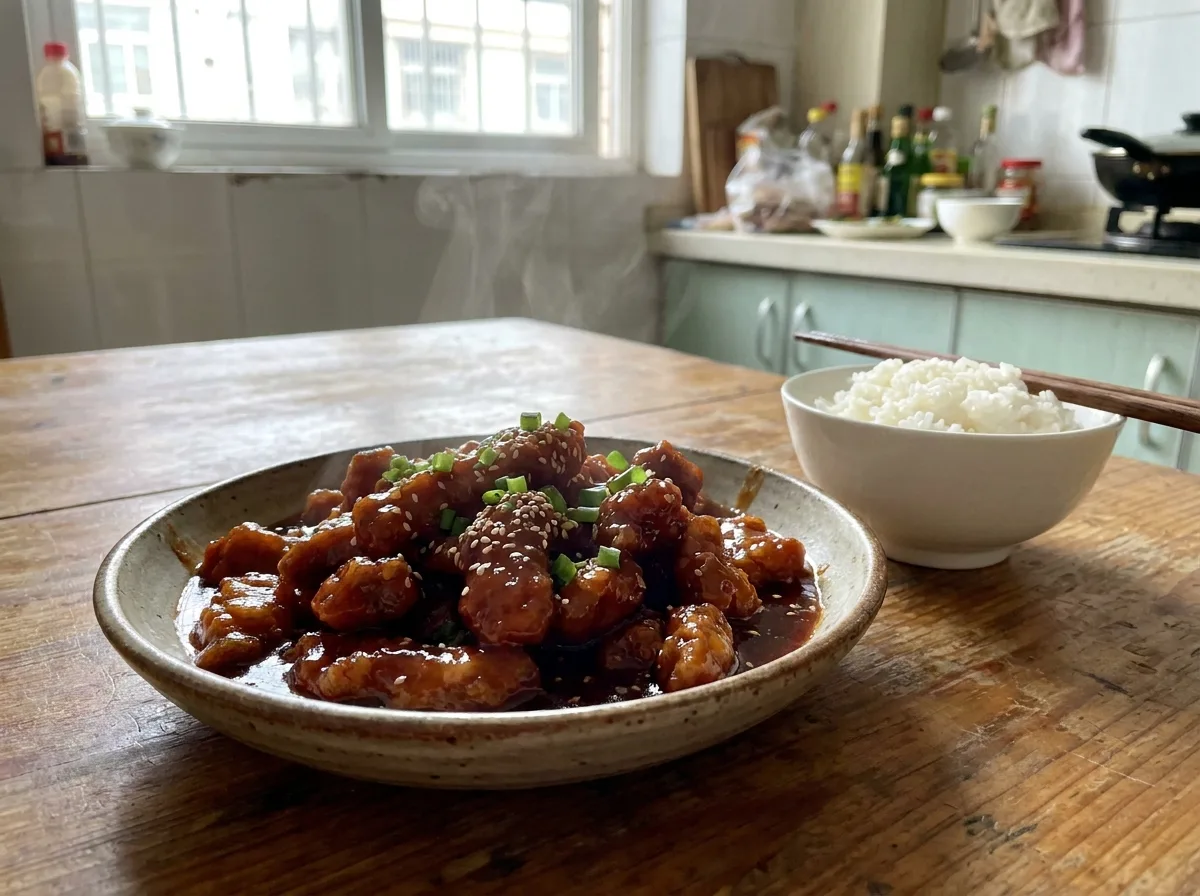
The double fry is the whole technique here: the first pass cooks the meat and sets the coating, the second, hotter one drives out moisture and leaves a shell you can hear from the next room. Punching the meat before it marinates tenderises it without a mallet, which is why the strips stay straight in the pan. Dress it at the last moment, or the crust softens before it reaches the table.
Ingredients
- pork tenderloin500 g
- vinegar10 g
- white sugar30 g
- cornstarch50 g
- egg50 g
- light soy sauce10 ml
- cooking wine20 g
- oyster sauce10 g
- tomato paste30 ml
- white pepper5 g
- salt10 g
Directions
- 1
Marinate: cut the pork tenderloin into thick slices, beat them with the back of a knife to loosen them, then cut into strips about a finger thick. Add the cooking wine, light soy sauce, oyster sauce, salt, white pepper and one egg, mix by hand until coated, and marinate for at least 20 minutes.
- 2
Sauce: combine the tomato paste with 10 g vinegar, 30 g white sugar and 150 ml water, and stir until the sugar dissolves. Set aside.
- 3
Dredge: do this before you start frying so you are not juggling both at once. Put the cornstarch in a large bowl and coat every strip completely.
- 4
Frying: lower the pork into oil at 160°C; test with a dry chopstick, and when small bubbles gather around it the oil is ready.
- 5
Fry over medium heat until the surfaces are pale gold, then lift out. Once the oil reaches 200°C, return the pork for about 40 seconds, which gives a very crisp crust; lift out immediately.
- 6
Coat: in another pan with a little oil, bring the sauce to a bubbling simmer, add the fried pork, and toss until every strip is covered.
- 7
Toss the fried tenderloin in the sauce, turn off the heat, and plate up.
Source: HowToCook · WorldBite adaptation · Unlicense source text; bilingual recipe adapted by WorldBite.