China · Hakka
Steamed Pork Belly with Preserved Mustard Greens
Pork belly fried until the skin blisters and steamed on a bed of mustard greens fried dry with garlic and chili, turned out onto the plate whole.
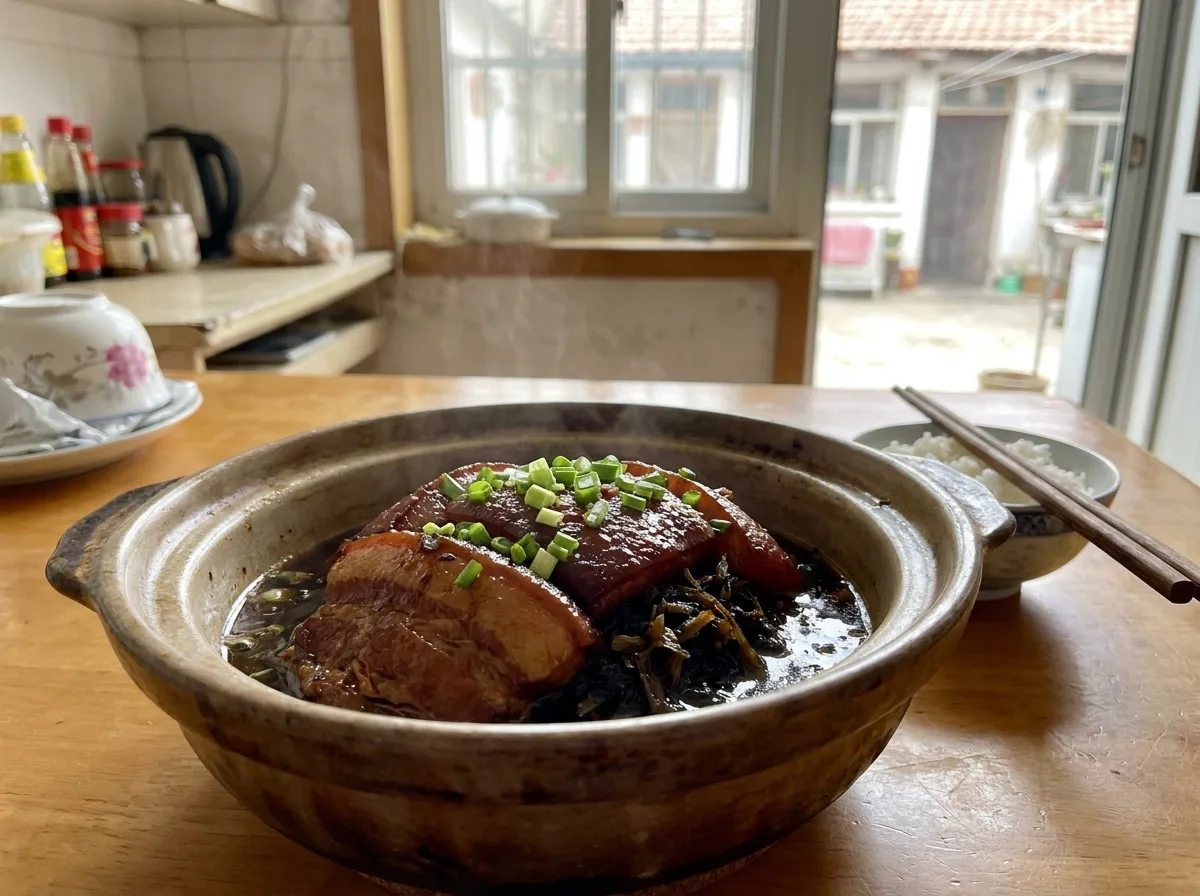
This is a Hakka dish and one of the great set pieces of a Chinese banquet, though plenty of families cook it at home on any day that calls for it. The pork is boiled, fried to color the skin, then steamed on a bed of mustard greens that have been fried dry with garlic and chili. Turning it out of the bowl is the moment everyone at the table is waiting for.
Ingredients
- pork belly200 g
- preserved mustard greens30 g
- five-spice powder2 g
- cooking oil300 ml
- sugar5 g
- dark soy sauce30 ml
- light soy sauce20 ml
- bird's eye chili1 pieces
- minced garlic10 g
- salt2 g
- chicken bouillon2 g
Directions
- 1
Soak the mustard greens in cold water for one hour.
- 2
Add fifty milliliters of oil to the pan, put the whole piece of pork in skin side down for one minute, then take it out and scrape the skin. Optional.
- 3
Bring water to a boil in the pot, add the pork and cook over high heat for twenty minutes, until a chopstick goes in easily, then lift the pork out.
- 4
Rub dark soy sauce, five-spice powder and sugar evenly over the surface of the pork and leave for fifteen minutes.
- 5
Heat the wok with oil, add the pork and fry over medium heat until golden on both sides, three to five minutes.
- 6
Heat the wok with oil, add the mustard greens with the bird's eye chili, minced garlic, chicken bouillon and salt, and stir-fry until the greens are dry.
- 7
Slice the pork, the thick end cut half a centimeter to one centimeter thick, and arrange it in a large bowl, scattering the mustard greens over it.
- 8
Steam over medium heat for forty-five minutes.
- 9
Take a plate, cover it over the bowl of pork and turn the pork out onto the plate.
Source: HowToCook · WorldBite adaptation · Unlicense source text; bilingual recipe adapted by WorldBite.